Introduction
In today's digital age, the Internet and technology have become integral parts of our lives. As technology continues to advance, so do the challenges and risks associated with online activities.
To address this critical need, I embarked on developing a comprehensive bundle of cyber wellness courses to equip individuals on the autism spectrum with the knowledge and skills necessary to navigate the digital landscape safely and responsibly.
Category
- eLearning Design
Tools
- Adobe Photoshop
- Adobe Illustrator
- H5P Tools
- Google Forms
- Canvas LMS
Domain
- Digital Literacy
Skills
- Content Development
- Graphic Editing
- Illustration
- HTML/CSS
Course Design
The courses in the cyber wellness programme were carefully crafted to cater for individuals on the autism spectrum. The courses were structured to be progressive, starting with foundational concepts and gradually delving into more advanced topics.
Each course within the bundle was designed to cover the key aspects of cyber wellness:
- Be Smart Online: Verify the credibility or reliability of information and create and share content responsibly.
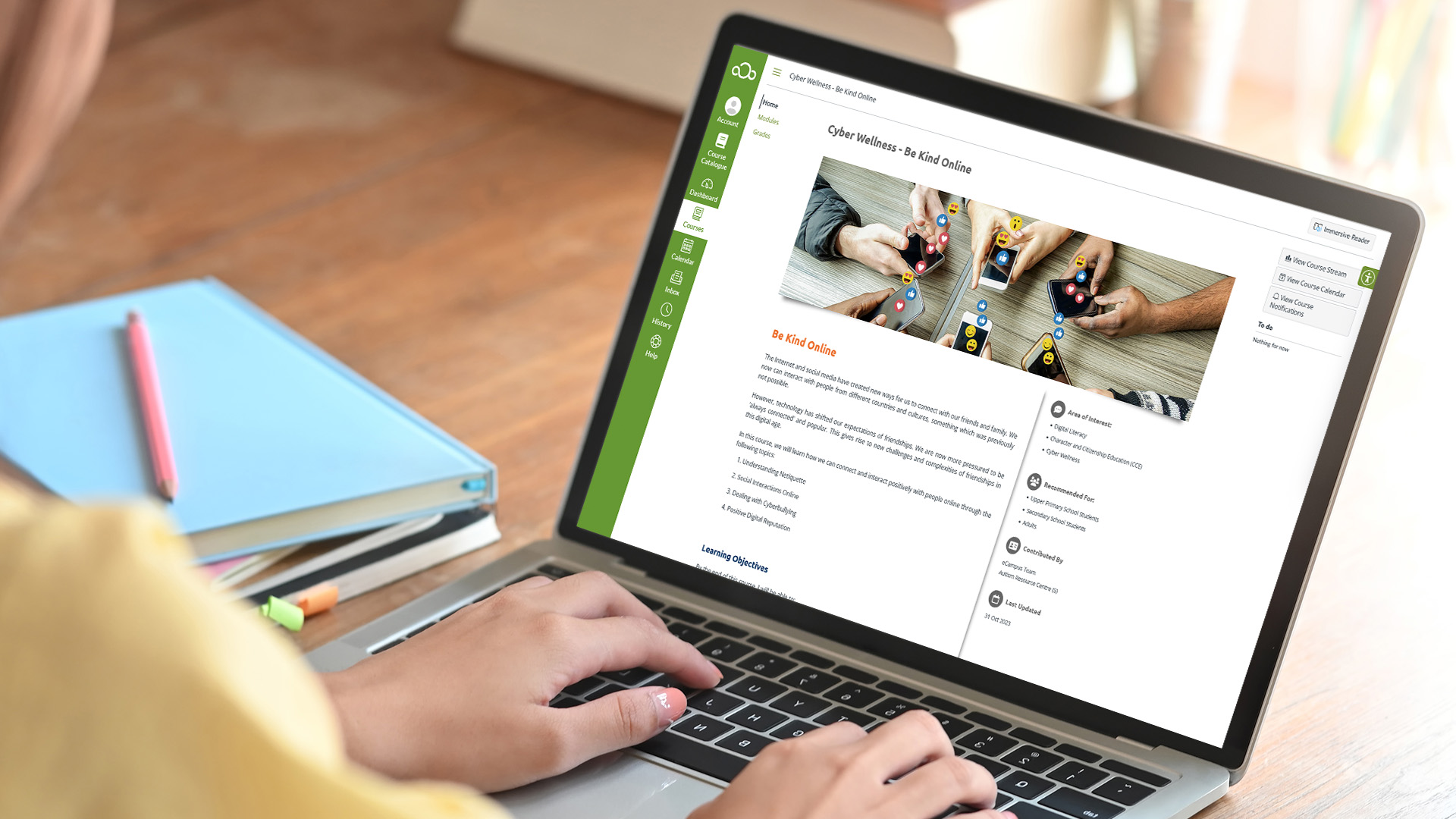
- Be Kind Online: Connect and interact positively with people online.
- Be Safe Online: Safeguarding personal data, identifying potential scams, and consuming digital media responsibly.
Course Development
The development phase of the cyber wellness programme involved lesson planning, content curation, and implementation of various instructional elements. Leveraging instructional design principles, each course was developed with the following key considerations:
-
Personal and Relatable: Introduced customised characters to make the content more personable and relatable. Learners can learn alongside the characters and their stories, as they navigate through the course. Storytelling enables learners to better connect with scenarios that mirror real-life situations. The characters also link different topics together to maintain a cohesive and unified learning experience.
-
Authentic: Contemporary issues have been brought in to make learning authentic and current. The case studies in the courses have been updated to reflect the latest technological developments and trends.
-
Interactive: The courses feature a variety of interactive elements to keep learners engaged. Curated videos support the understanding of complex topics. Online activities aim to engage learners and make learning fun. Infographics help summarize key learning points and are useful for quick revision. Reflection activities encourage critical thinking, self-awareness, and a deeper understanding of the content. Quizzes at the end of the course provide timely and constructive feedback to learners.